Welcome to China eView in Vancouver Canada. Your perspective on China and Canada


Saturday, October 22, 2011


After six months of fighting, rebels of the anti-Gaddafi regime, known as the National Transition Council, have successfully taken over the coastal city of Sirte, the last stronghold of the former regime. Muammar Gaddafi was shot and killed in his hometown of Sirte, his body was in custody of the National Transition Council of Libya. This event has officially marked the end of the Gaddafi's Libya that lasted for over 40 years.

The crisis in Libya began during the February of 2011. People of Libya started to stand up and urge for more personal freedom with the influences from neighboring countries such as Egypt and Tunisia. This massive protest soon became a large scale crisis and immediately brought the international attention. The United Nations  established a non-fly zone over Libya during March while the NATO conducted several airstrikes against the Gaddafi's ground forces. The National Transition Council of Libya was formed in Benghazi, a coastal city in eastern Libya, during March. Its goal was to organize all the anti-Gaddafi rebels in Libya and establishes a fully democratized republic. The rebels were advancing day by day and finally captured the Libyan capital city of Tripoli and ousted the former regime but Gaddafi and his family have escaped the city without any trace.

In September of 2011, the United Nations and the European Union recognized the National Transition Council of Libya as the only legal representative of Libya. Soon, most countries around the world have abandoned the diplomatic relationship with the former regime and recognized the National Transition Council. With the death of Gaddafi on October 20th, the National Transition Council has scheduled the Libyan liberation announcement on the 22nd of this month.


Sunday, October 9, 2011


Steve Jobs, the former CEO and the co-founder of Apple Inc., passed away Wednesday after a 7 years battle with the pancreatic cancer.

Steve Jobs, along with Steve Wozniak, founded the Apple Inc. in 1976 and started to create personal computers such as Apple I and Apple II. In 1984, Jobs introduced the first commercial use PC - the Macintosh and it has quickly changed the idea about computers among the ordinary people.

Unfortunately, due to an internal conflict in 1985, Steve Jobs was fired by Apple. After that, he founded company called NeXT computer and another one called Pixar Animation. Both companies have paid an important contribution to the industry. Steve Jobs was the executive producer of 1995 3D animation film Toy Story.

Apple bought the NeXT computers in 1997 and brought back the company's co-founder Steve Jobs. He became the CEO in July of the same year and began to reform Apple by terminating projects like the Newton. In 1998, he introduced the first iMac and it has immediately raised the reputation and the market share of Apple.

In 2001, Steve Jobs introduced a portable media player named iPod and it has became a revolution in the music industry. Apple's reputation has been undergoing a significant raise in the first decade of the 21st century with the sale of the iPods.

In 2007, Apple introduced the first iPhone and it has changed people's perspectives about cellphones. The iPad, which was just introduced last year, has set up a industry standard for all tablets.

Steve Jobs was infected with the pancreatic cancer in 2004 and brought many people's attention on his health issues since then. He received a liver transplant in 2009 and took several medical leaves after that. Steve resigned as Apple CEO in August 2011 due to serious health issues, the spot of CEO has been replaced by Tim Cook. Jobs died peacefully at his home on October 5th according to his family.

After the death of Steve Jobs, Apple changed it's official websites to a huge black and white portrait of Steve to remember the death of this great man. President Obama, Bill Gates, Mark Zuckerberg and Larry Page have expressed their sorrow and sadness regarding to this sudden news.

Apple fans all around the world are currently paying a tribute to Steve Jobs by posting remembrance stickers at their local Apple Stores.


Sunday, September 25, 2011


The year 2011 is the 100th anniversary of Xinhai Revolution, the revolution that changed the destiny of all the Chinese people.

On October 11th, 1911, the supporters of Dr. Sun Yet-sun and other revolutionaries started the the Wuchang Uprising which marked the beginning of Xinhai Revolution against the Qing Dynasty, the feudal empire that ruled China for more than three hundreds and fifty years. The Qing Dynasty was officially dissolved on February 12th, 1912, which was followed by the establishment of the first republic in Asia - the Republic of China. 

During Qing Dynasty, China was not ruled by the Han people, it was ruled by the Manchus who took over Beijing and overthrown the Ming Dynasty in 1644. China was completely closed up during the rules of Manchus which caused the domestic development to slow down. This serious of internal corruptions caused the western countries to invade China in the mid-1800's. British for example, started the Optium War against China and gain the rights over Hong Kong under the Treaty of Nanjing, which was the first unequal treaty signed in the history of China. The British also transported many opium to China and caused a great amount of Manchu officials to suffer illnesses and pains. Soon, Russians took northern Manchuria, Japan took over the island of Taiwan and Germany occupied the Shandong Peninsular. All of China was in chaos. 

The people of China finally woke up in this chaos when revolutionaries such as Dr. Sun Yet-sun spreads the benefits of a democratic society. Soon, revolutionaries from all across China were united when Sun established Tongmenghui, known as the Chinese United League. After the overthrown of Qing Dynasty. The Provisional Government of Republic of China was established and Sun Yet-sun became the first president in China.

Today, Chinese from all across the world are celebrating the victory of Xinhai Revolution. October 11th is also known as the Double Ten Day in Taiwan, which is recognized as the National Day of the Republic of China.

Sunday, September 18, 2011

Remember 9/11

12:51 AM
0


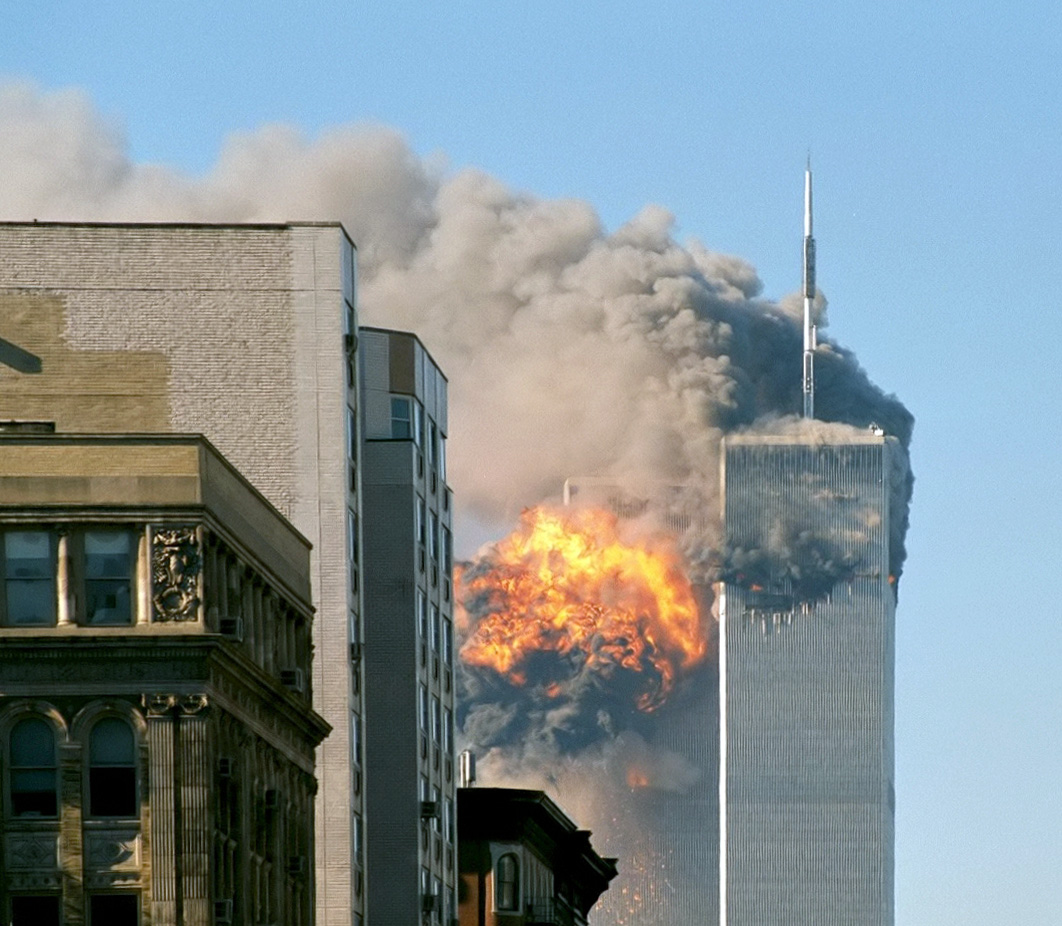
It has been ten years since the horrific attack on the World Trade Centers and the Pentagon. It was the event that brought America into the War on Terror and it has became a symbol for the destruction of humanity. The site of the Twin Towers, Ground Zero, still lays the memories of those who sacrificed their lives on the day of the attack. Although Bin Laden has came to an end after a decade, but the war against terrorism continues on.

It was an ordinary Tuesday morning in New York City, everybody was on their routine schedule to work. None of them will know that a tragedy was about to take place...........

American Airlines 11, a routine flight from Boston to Los Angeles, was hijacked in the mid air and crashed into the North Tower of World Trade Center at 8:36 local time, leaving the upper portion of the building in smoke. Meanwhile, United Airlines 175, another flight from Boston to Los Angeles, was also hijacked and crashed into the South Tower of World Trade Center at 9:03, which caused a huge explosion between level 77 and 85 of the building. Evacuation notice was issued right after the strike for all people who were in the impacted zone as well as the buildings of WTC. The South Tower collapsed at 9:58 and the North Tower collapsed at 10:20 which leaved Downtown Manhattan in smokes and ashes. 2752 people, which includes 157 passengers, were killed in this event and only a small amount of people survived from the collapse. At 5:21 PM, 7 World Trade Center collapsed completely due to fire according to the official report.

A portion of the Pentagon in Washington D.C was also damaged by a hijacked American Airlines 77 from Washington Dulles. 125 people in the building were killed and no survivals on the aircraft. United Airlines 93 from Newark to San Francisco was the fourth and the last aircraft that got hijacked during 9/11. This aircraft was planned to strike the U.S. Capitol Building in the east end of National Mall but instead it crashed into a grassland near Shanksville, Pennsylvania when the passengers tried to regain the control of the airplane. None of the people on board survived.

The site of the Twin Towers in New York was replaced by two enormous water fountains embraced by black marbles that are marked with the name of the victims. The new WTC Building 7 was constructed on the old site and the One World Trade Center, a new skyscraper in Lower Manhattan, is scheduled to complete in 2013 and will become the tallest building in the United States. Memorials dedicated to the 9/11 victims can be also found in near the Pentagon and the crash site of United 93 in Shanksville, Pennsylvania.

During the tenth anniversary of 9/11 Attack, U.S. President Barack Obama visited the 9/11 memorials in New York, Shanksville and Arlington and made speeches to encourage American Patriotism.


Saturday, June 11, 2011


1919: Communism and Marxism ideas started to spread widely after the May Fourth Movement in China. A lot of youths were inspired by the Russian October Revolution in which the proletarians overthrown the Tsar regime.

1921: The Chinese Communist Party was founded during the summer of 1921 by Chen Duxiu and Li Dazhao. The National Congress of CCP was held in the French Section of Shanghai on July 23nd. Due to the sudden inspection by French polices, the last meeting was held on a fishing boat in the South Lake of Jiaxing. The Central Committee of CCP decided to make July 1st as the anniversary of foundation of the party. Early members of CCP include Mao Zedong, Zhou Enlai, Zhu De, Lin Biao and later Deng Xiaoping (in France).

1922: CCP joined the Comintern and accepted supervision from the Communist Party of Soviet Union.

1923 - 1924: The founder of Republic of China, Sun Yet-sun, decided to work closely with CCP after a meeting with the Comintern representative Henk Sneevliet. All members of CCP joined the Kuomintang as Sun hosted the First National Assembly in 1924 and decided to unite with the Soviet Union and the CCP to solve the domestic problems of China such as imperialism and feudalism. This marked the first cooperation between Kuomintang and CCP. With the help from the Soviets, Huangpu Military School was opened in Guangzhou with Chiang Kai-shek as the principal.

1925 - 1927: After the death of Sun Yet-sun in 1925. Chiang Kai-sheck gained the power of Kuomintang and launched a full scale attack on CCP and killed many of its members. As a result, CCP leads by Zhou Enlai started the Nanchang Uprising in 1927 and built their own army called the “People's Liberation Army". Nanchang Uprising marked the first break up of Kuomintang and CCP.

1927 - 1930: CCP carried out several uprisings in southern China and caused the Kuomintang to attack the communist bases in Hunan, Jiangxi and Guangdong Province.

1931: Mao Zedong established a communist regime in Jiangxi Province named "Chinese Soviet Republic". The Kuomintang Government decided to destroy this regime by launching Encirclement Campaign against the Jiangxi Soviet.

1934 - 1936: Kuomintang finally succeeded on the 5th Encirclement Campaign against the Jiangxi Soviet. As a result, the Red Army in Jiangxi and Hunan led by Mao launched a full scale retreat to Yan'an in northwest China known as the "Long March". The Long March last for 2 years and stretched over 12,000 kilometers.
The communists encountered many problems during their retreat which includes extreme cold weather, lack of foods and the advancing of Chiang's forces on their back. As a result, only 25,000 out of the original 300,000 arrived at their final destination.

1936: The arrest of Chiang Kai-sheck by his colleague Zhang Xueliang during Xi'an Incident forced KMT to cooperate with CCP due to the Japanese aggression on China.

1937 - 1945: Japanese started to attack central China and launched the second Sino-Japanese War. The communist party transformed its red armies into Eighth Route Army and New Fourth Army. Both divisions will be led and supervised by Kuomintang and the Nationalist Government to defend China from foreign attack.

1945: Japanese surrendered in China as the World War 2 ended. Mao Zedong and Zhou Enlai flew to Chongqing to negotiate with Chiang Kai-sheck and his Kuomintang representatives about China's future and the forming of a united democratic government.

1945 - 1949: Chiang betrayed the joint agreement that was made between KMT and CCP and started to attack CCP controlled regions all across China. The Chinese Civil War broke out again. A lot of civilians and members of other parties strongly opposed this warfare and stated that Chinese people killing each other are not acceptable. Many opposition personnel were either arrested or killed by KMT spies. At the same time, the United States Government terminated the financial support for the KMT regime and caused the party to lose its advantage during the civil war. After 4 years of fighting, CCP captured most of Mainland China and forced the Nationalist Government to retreat to Taiwan.

1949: The Chinese Communist Party led by Mao Zedong established the People's Republic of China in Beijing on October 1st.

1950: The People's Liberation Army
liberated Tibet and cleared out the local separatists.

1950 - 1953: Due to the warfare in the Korean Peninsula, the CCP decided to send voluntary forces to North Korea and participated in the Korean War.

1953 - 1966: The CCP launched many political events in the next decade, most of these events heavily damaged the society and economy of China. One of the most famous event was the "Great Leap Forward" which was later on became the direct cause of the "Great Chinese Famine". During early 1960's, conflict broke out between CCP and
Khrushchev, the head of USSR. A series of "Anti-Soviet" movement occurred after the recall of Soviet experts. The Chinese Government stated that the Soviets were "social imperialism".

1966: Mao Zedong launched the Cultural Revolution and caused a huge depression in the nation's economy and a disaster for Chinese culture. A lot of ancient Chinese antiques and heritage sites were either ruined or destroyed by Mao's Red Guard. It was known as the dark age of the republic, schools and universities were terminated as
scholars and intellectuals were classified as "Going Capitalized". Many of Mao's old colleague such as Liu Shaoqi and Deng Xiaoping were classified as "Anti-Revolution" and expelled from the party. Liu Shaoqi was persecuted to death while Deng Xiaoping was back in office after the disaster. A political organization named "Gang of Four" was formed during the Cultural Revolution to secure the central leadership.

1972: US President Richard Nixon changed his foreign policy and paid an ice-breaking trip to China. During the same year, the United Nation replaced the seat for China with PRC instead of ROC.

1976: Mao Zedong died in Beijing as the Culture Revolution came to an end. Gang of Four was arrested and sent to justice.

1978: Deng Xiaoping came back to office and became the top leader of CCP. He stated that China needs to reform and open up to the whole world. The nation needs to focus on economy and international trade instead of making useless political events. The reformed government also rehabilitated the people who were persecuted during the Cultural Revolution.

1979: China officially launched the "Reform and Open Up" plan carried out by Deng Xiaoping. He appointed several cities along the Chinese coastline such as Tianjin, Qingdao and Shenzhen to open up for international trade. Shenzhen for example, was just a fishing village before 1980 and was quickly transformed into a major metropolis in southern China during the 1990's.

1984 - 1985: Deng Xiaoping negotiated with the British and Portuguese Government about the issues regarding to Hong Kong and Macau's sovereignty. The Joint Declaration with Britain and Portugal was made in 1988 and announced that Hong Kong will return to China in 1997 and Macau in 1999.

1989: University students went on a hunger strike in the Tiananment Square of Beijing due to the desire of more democracies in China. As a result, CCP sent troops into Beijing and cracked down this democratic movement with the casualties of over a hundred students. This incident was known as "June 4th Incident" to the western world and information about this event is still forbidden in Mainland China.

1990: CCP decided to open up Pudong region in Shanghai as an economic zone.

1992: Deng Xiaoping made a visit to southern China to see the progress of economic development. During that time, a lot of cities along the coastline were refreshed with modern skyscrapers and the living standard in China has greatly raised.

1993: Jiang Zemin (President) and Li Peng (Prime Minister) became the third generation CCP top leaders.

1997: Hong Kong return to China on July 1st.

1999: Macau return to China on December 20th.

2001: China joined the World Trade Organization.


2002-2003: Hu Jintao (President) and Wen Jiabao (Prime Minister) became the fourth generation CCP top leaders.

2005: CCP invited the head of Kuomintang, Lien Chan, to visit the mainland. He was the first Kuomintang leader who visited the mainland since the broke up in 1949. The trip of Lien Chan
has promoted the cross-strait relation and restored the peace talk over the Taiwan Strait.

2008: Beijing successfully host the 29th Summer Olympic Game.

2010: Expo 2010 in Shanghai. China
signed Economic Cooperation Framework Agreement with the Taiwanese Authority.

2011: 90th Anniversary of the Chinese Communist Party.

Saturday, May 14, 2011


On May 12th 2008, a devastating 8.0M earthquake occurred in Wenchuan County of Sichuan Province and killed over 68,000 people. It was the most serious earthquake that hit China since 1949. Many towns in the affected areas were completely destroyed during the earthquake and several landslide dams were formed afterward. The Chinese government spent 1 trillion Yuan on the reconstruction of the earthquake zone including Wenchuan County and Beichuan County.

There has been an enormous change after three years since the Sichuan Earthquake. Most of the ruins in the affected areas are replaced with new buildings and all the damaged nature sites are restored to normal. The life of Wenchuan residents have returned to normal and many of them are now living in the newly constructed apartments.

Ruined location of the old Beichuan County has been abandoned after the earthquake but it is now reconstructed as a brand new city in a newer location. Several museums and earthquake memorials have also been built for people to remember that horrifying disaster. One of the examples would be the ruins of Xuankou Middle School, which collapsed during the earthquake, are kept and become the Monument of Sichuan 512 Earthquake.

The Wolong Nature Reserve has been restored, as a result, giant pandas have moved back to their homeland from their temporary rehabilitation centre. Additionally the landslide dam are transforming into a level AAAA National Park of China.

Friday, May 6, 2011


Osama Bin Laden, the head of Al-Qaeda terrorist organization, was killed by U.S SEAL squad during a crossfire in northern Pakistan on May 1st 2011. His body was later examined and placed in the Arabian Sea.

Bin Laden was involved in many terrorist activities around the world. One of the most famous incident that was carried out by him was the attack on the World Trade Center in New York and Pentagon (Department of Defense) in Washington D.C by using hijacked commercial jets on September 11th 2001. Since then, the United States government led by George Bush launched the War on Terror and stationed a lot of U.S. forces in the Middle Easts. Bin Laden has also became the most wanted terrorist in the US and other countries.

The group Al-Qaeda (The Base) was formed by Osama Bin Laden during the Soviet invasion of Afghanistan in the early 1980's with American's support. Osama's anti-Soviet spirit was greatly appreciated by the US government and he was a hero to the American people at that time. Bin Laden started to hate the Americans after the launch of the Gulf War in 1991, he believed that the Americans are devils to the Islamic and Arabic world and should be eliminated right away. As a result, Al-Qaeda started to commit terrorist activities all around the world. Until now, they have committed over a hundred terrorist attack on civilians such as the 911 incident in New York and the bombing of London Metro.

Soon after the killing of Osama Bin Laden. US President Barrack Obama announced the news to the world through the speech in White House. He also mentioned that the United States and other countries should stay at full alert due to the possible revenge from Al-Qaeda or other terrorist organizations.

Saturday, April 30, 2011


The Royal Wedding of Prince William, Duke of Cambridge, and Catherine Middleton took place on April 29th at the Westminster Abbey in London. Prince William first met Catherine in 2001 when both of them were studying at St. Andrews University. Their engagement was in October 2010 and announced during November. This wedding has brought a lot of media's attention and was broadcasted lively around the world with an audience of over two billion. Many people have compared and contrasted this event with the 1981 wedding of Prince William's parents, Prince Charles and Princess Diana (1961-1997).

After the cars of the royal families from the Buckingham Palace arrived at the Westminster Abbey at 11:00 AM the streets of London were filled with pomp and cheer, the ceremony started. Several speeches and choir singings were made during the ceremony; after the bishop's addressing, the couple exchanged their ring and kissed each other. A magnificent parade and air show took place after the ceremony as the bride and groom was carried back to the Buckingham Palace by a State Landau for an afterward public appearance on the balcony with Queen Elizabeth II and Prince Charles.

The couple decided to postpone their honeymoon after the wedding and live on the Isle of Anglesey in North Wales to continue Prince William's career as an RAF Search & Rescue pilot.

Saturday, April 23, 2011


The Chernobyl Disaster was a nuclear incident that occurred on April 26th, 1986 at the Chernobyl Nuclear Power Plant in northern Ukraine. The explosion, which was caused by a sudden power output surge, released large amounts of radioactive contamination into the atmosphere and spread all the way to Norway in western Europe. It was considered as the worst nuclear incident in the history and the scale of this disaster had been raised to level 7, which is the highest level according to the International Nuclear Event Scale.

This disaster had caused 30 workers to die immediately during the explosion and over 500,000 workers had found nuclear contamination inside their body. Over 350,400 residents were evacuated from the affected areas in Russia, Ukraine and Belarus, the place where 60% of fallout were landed according to the post-Soviet data. The Soviet Union had spent 18 billion rubles on this disaster which heavily crippled their economy.

Today, the area surrounding the power plant still contains radioactive contamination and the town of Pypiat, which is the closest town to the power plant, has been abandoned and became a "ghost city".

The Fukushima disaster that occurred in Japan during the earthquake is very similar to the Chernobyl Disaster. Both incidents have been classified as level 7 event on the international scale and affected much of the nation's soil and other countries. People are calling Fukushima the second Chernobyl and and the towns beside it will probably abandon by its residents due to high volume of radioactive contamination.

Friday, March 25, 2011


U.N. Security Council responded to the crisis in Libya by imposing a no-fly zone over the country and using force against Gaddafi‘s forces in order to protect the civilians. Several countries including Russia, China and Germany abstained from voting on this resolution, because Russia and China were concerned about outside powers interfering Libya's internal affairs while Germany feared that military actions would raise a new conflict.

The command of this military operation in Libya has been handed to NATO and the operation, named "Odyssey Dawn", is now led by Canada.

On March 19th, after the first wave of attack with 110 Tomahawk Cruise Missiles targeting Libyan air defenses in coastal regions, American, British and French air forces significantly destroyed a number of military targets at several inland areas.

American forces launched another air strike next day, which consisted of F-15 and F-16 fighters along with three B-2 Spirit bombers, consequently, the Libyan military airfields under the attack have been heavily damaged. No US aircraft was lost during the missions.

On March 23rd, an American F-15 fighter which took off from a NATO air base in Italy crashed in Libya due to mechanical problems. The two pilots were safely ejected and rescued by the US Navy. Unfortunately, six local civilians were injured by gunfire from the rescue team.

On March 24th, Royal Norwegian Air Force launched their first attack against Libyan ground troops with their F-16s.

Thursday, March 17, 2011


Three nuclear reactors in Fukushima exploded last week as a result of the tsunami attack caused by the devastating earthquakes in northern Japan. The incidents have released a series of radiation that were 800 times more intense than the recommended exposure in Japan, raising the risk of uncontrolled radiation over the Pacific regions.

The Japanese government has evacuated all the residents from the affected areas and applied cooling liquid to the reactors in order to prevent further explosion. Unfortunately, several people in these regions have been exposed to the radiation. Right now, reactor four, five and six may be at the risk of overheating. Therefore, the government has called for American assistance over this situation. Tokyo, which is located 180 miles south of the reactors, has reported their radiation was slightly above normal. As a result, the official has warned the residents to stay indoor. Moreover, the International Atomic Energy Agency (IAEA) Director General Yukiya Amano flew to Japan from Austria on Wednesday to negotiate with the Japanese Premier Naoto Kan about the nuclear proliferation.

On the other side of the Pacific Ocean, the Canadian and American governments have confirmed that the radiation will eventually disappear into the atmosphere when it reaches the west coast of North America.

This incident has been the most dangerous nuclear radiation in the Japanese history after the atomic bombing of Hiroshima and Nagasaki in 1945.

Friday, March 11, 2011


On March 11th 2011, a devastating 8.9M earthquake occurred in the northeastern coast of Honshu, Japan, about 130 kilometers off the shore of Miyagi Prefecture. This earthquake was the most powerful earthquake recorded in the Japanese history and the most destructive quake after the 1995 Kobe Earthquake.

The shock created a large scale tsunami towards the Honshu Island and caused enormous damages to the northeast coast of Japan. According to the Asahi News, more than 1600 people have died and 1900 are missing in six different prefectures. Thousands of homes were destroyed as cities were flooded and burned, as the results, over ten thousands residents were trapped in the flooded zone and tons of vehicles were brushed onto the street. Four passenger trains containing an unknown number of people disappeared in the coastal region as well as a ship with several crew members. Major oil refineries in these regions were caught on fire and several nuclear power stations in Onagawa, Fukushima and Tōkai were automatically shut down due to the risk of nuclear explosion. Several aftershocks have occurred after the major quake and caused serious damage to Tokyo and its surrounding areas, therefore, train services have been terminated and all flights in Narita International Airport have been cancelled.

As a response to this disaster, the Japanese government
sent the Self-Defense Forces to help the rescue operation in those earthquake zones and the United States government stated that they would send two aircraft carriers to Japan for this operation. Other countries also responded to this incident by sending relief supplies and donations.

A tsunami alert has been raised to all islands in Southeast Asia and Pacific Ocean as well as the west coasts of North & South America. In addition, a ten centimetres water rise has been reported in Hawaii and the west coast of Vancouver Island in BC, Canada.

Sendai Airport Flooded

Updates: Fukushima I Nuclear Power Station just exploded and Fukushima II is at high risk of explosion. The government has evacuated all the residents within the affected areas.

Updates: Fukushima II exploded and all of Pacific regions are under the threat of the nuclear radiation.

Saturday, February 12, 2011

China made a significant progress throughout the year 2010. The nation's economy stayed stabilized in the pressure from the western world and joined several international conferences about the climate change and North Korean nuclear issues.


Two tragical natural disasters happened in China during 2010. The first one was Yushu Earthquake which was a 6.9M earthquake occurred in Qinghai Province in early April. According to the state media, 2183 people were confirmed died. After the shock, People's Liberation Army sent over 3700 soldiers for the rescue operation and did a great job on saving the civilian who trapped in the ruins. Another disaster was Zhouqu Mudslide that occurred in southern Gansu Province during mid-August. This tragedy was caused by the heavy rains in the area and killed more than 1400 people. Both disasters were listed as National Mourning Day along with the Sichuan Earthquake in 2008.


China hosted two international events this year. The 2010 World Expo was held in Shanghai from May 1st to October 31st. During the expo, China showed the whole world about her unique way of city development, environmental protection and the vast Chinese culture under the theme "Better City, Better Life". About 190 countries and 50 international organizations participated in this Expo and it was a great success. Another event was the Guangzhou 2010 Asian Games in November. This game completely refreshed the face of Guangzhou and increased the reputation of Pearl River Delta.


The Chinese government signed a preferential trade agreement, named Economic Cooperation Framework Agreement (ECFA), with the Taiwanese authority. This agreement aimed to reduce tariffs and commercial barriers between the two sides. It was known as the most significant agreement since the civil war split China in 1949.


Overall, China has made enormous changes throughout the first decade of 21st century. From joining WTO in 2001 and launching first manned spacecraft in 2003 to hosting Beijing 2008 Olympic and Shanghai 2010 World Expo, China, the oriental giant, has waken up and ready to become the next World Super Power. Hope China will continue her glory in the new decade.